
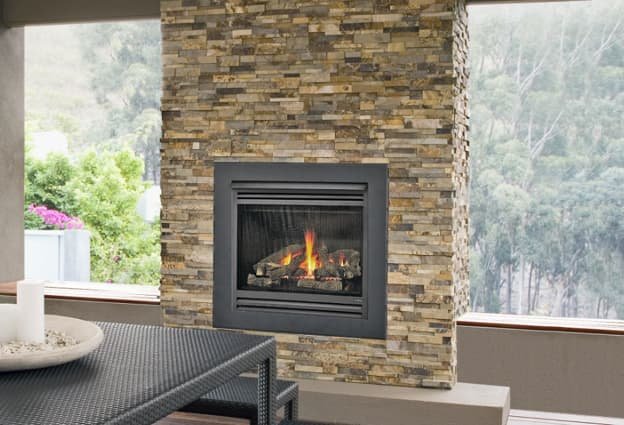
There is a particular irony that plays out in homes with traditional wood-burning fireplaces — the feature that looks most appealing in a living room ends up being used perhaps a handful of times across an entire winter, because the effort involved in sourcing dry wood, building a fire that actually takes, managing it through the evening, and cleaning up the ash and debris the following morning is enough friction to make the central heating and the sofa the more attractive option on most cold nights. The gap between how much people want a fireplace and how often they genuinely use one is almost entirely a friction problem rather than a preference problem. A gas log fireplace removes that friction so completely that it changes what the fireplace actually is in a household — from an occasional event requiring planning to something that happens simply because it is easier to turn on than to leave off.
What Instant Heat Changes About an Evening
Most heating discussions focus on output figures and efficiency ratings and timing — which is where gas fires create an experience wood fires cannot replicate — gets far less attention than it deserves. On a cold evening after a long day, a fire that starts within seconds without kindling, newspaper, or crouching in front of the hearth hoping something catches is not a trivial difference from a wood fire, and this immediacy compounds across a winter of evenings in ways that genuinely change how the living space gets used. Rooms reach comfortable temperatures quickly rather than slowly warming over the first half hour while the wood fire establishes itself, and households adjust their patterns accordingly — spending more consistent time in the main living space and experiencing the fireplace as a daily appliance rather than a weekend event.
Where Cleanliness Changes the Possibilities
The absence of ash, soot, and wood debris changes more than the maintenance routine — it changes where a fireplace can realistically be installed and how the surrounding space holds up over years of regular use. Gas log fireplaces work in rooms where a wood-burning option would generate cleaning demands incompatible with how the space actually functions — a master bedroom, a formal dining room, a study that doubles as a home office — because the only ongoing requirement beyond enjoying the fire is an occasional professional service check rather than daily ash removal and regular attention to chimney condition. Surrounds, hearths, and nearby furniture stay in their intended condition rather than gradually accumulating the evidence of regular fire use, which matters in rooms where the fireplace is as much a design decision as it is a practical heat source.
The Thermostatic Control Nobody Expects
Wood fires are managed rather than controlled — output adjustments involve adding fuel, adjusting airflow, and accepting that the fire follows its own trajectory across an evening regardless of what temperature the room has reached. Modern gas log fireplace installations with thermostatic controls maintain room temperature within a precise range automatically, adjusting flame and heat output in response to ambient conditions the way a central heating system operates — but with a genuine flame atmosphere that central heating cannot provide alongside it. For households using a fireplace as a primary heat source through an Australian winter rather than a supplementary one, this combination of precise control and visual warmth is practically significant in ways that go well beyond the convenience of not having to check on it every hour.
Zone Heating That Makes Real Sense
The ability to heat a specific living area with a gas fire rather than running central heating throughout an entire house has become increasingly relevant to Australian homeowners as energy awareness has sharpened and the appeal of targeted, efficient heating has grown accordingly. A gas log fire in the main living area maintains comfortable temperatures in actively used spaces without heating bedrooms, corridors, and unoccupied rooms simultaneously, which reduces overall consumption compared with whole-house heating approaches. This zone heating logic applies particularly well to Australian homes in southern states where winter temperatures require consistent heating across several months but actual usage patterns vary considerably between daytime and evening hours.
Conclusion
A gas log fireplace brings together the visual warmth of a real fire, the practical convenience of a controllable appliance, and the installation flexibility of a format that works across a wide range of Australian homes without the maintenance demands that make traditional fireplaces less practical than they are appealing. For homeowners looking to add genuine warmth — physical and atmospheric — to their living spaces without the friction historically associated with fireplace ownership, gas log fires earn their place as a daily-use appliance rather than an occasional seasonal feature that looks better than it gets used.